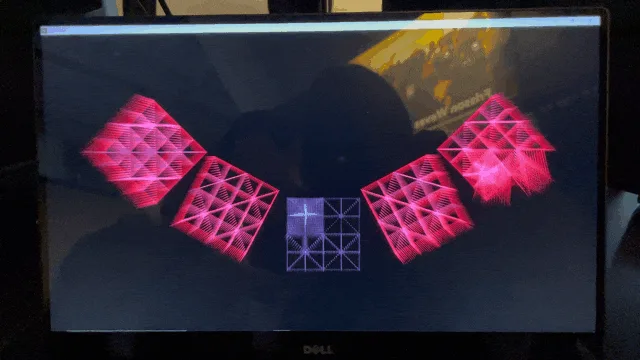
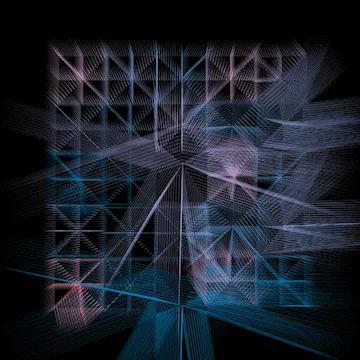
"Frisson Waves" uses AI/ML to enhance and transmit aesthetic chills by translating physiological signals into thermal data, inducing frisson. We trained a frisson-recognition ML model with gathered data and applied it in live concerts, allowing the wearable system to capture intimate reactions and create a transformative experience for both individuals and the collective.
workflow
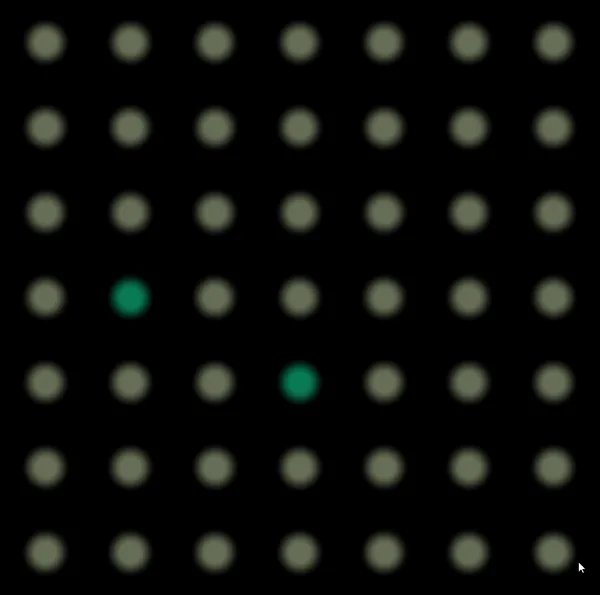
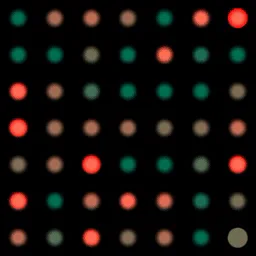
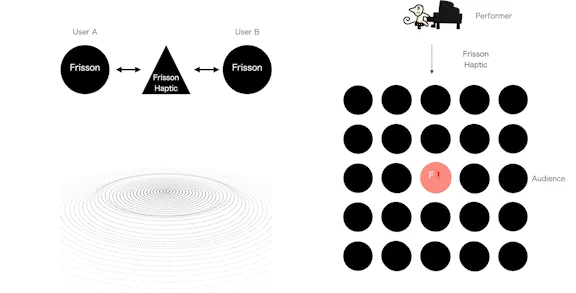
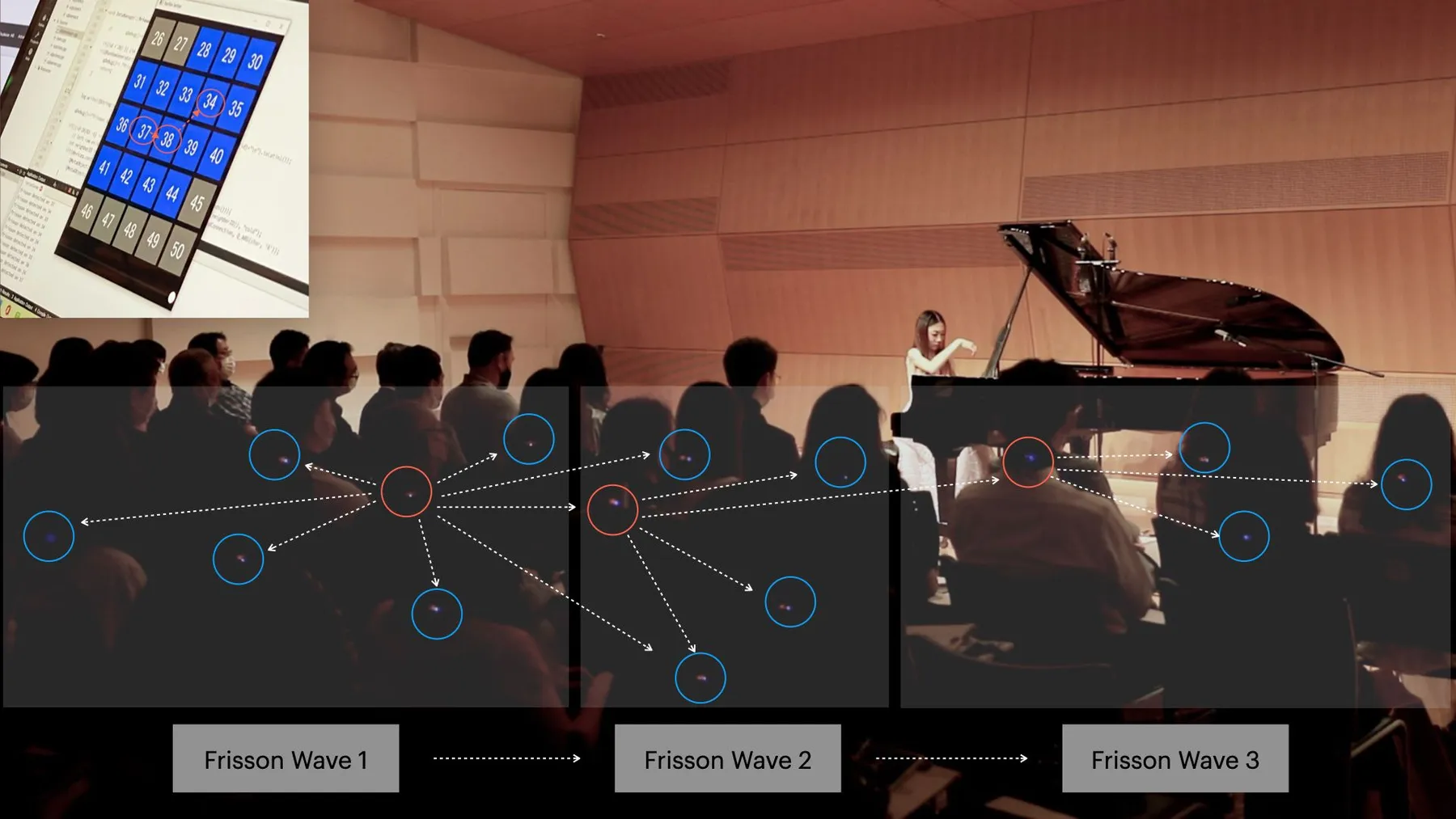
The flow of sharing frisson is as shown in picture above. Firstly, physiological data recorded from the wristbands is streamed to the server in real time. Secondly, the server processes the received data, extracts certain features and detects frisson using the trained model every 10 seconds and operates within a 2 minute adjustable sliding window. Thirdly, the system activates the thermo-haptic neckbands around the detected audience members like a drop of water falling down to create the rippling wave pattern. Thereby, the system enables the transmission of frisson in a pattern like a rippling wave.
design process
- 4/9
Study 1: understand frisson in situ

Frisson Waves Concert I.
Denenchofu Piano Salon
田園調布Salon, 20 audience, 1 h
- 5/1
Study 2: automatic detection of frisson

Media Studio, 30 participants
- 5/20
Study 3: trigger frisson

Hacking Studio, Media Studio
15 participants
- 6/25
Study 4: sharing frisson in the wild

Frisson Waves Concert II.
Kawasaki Assembly Room
川崎音楽工房, 50 audience, 1.5 h
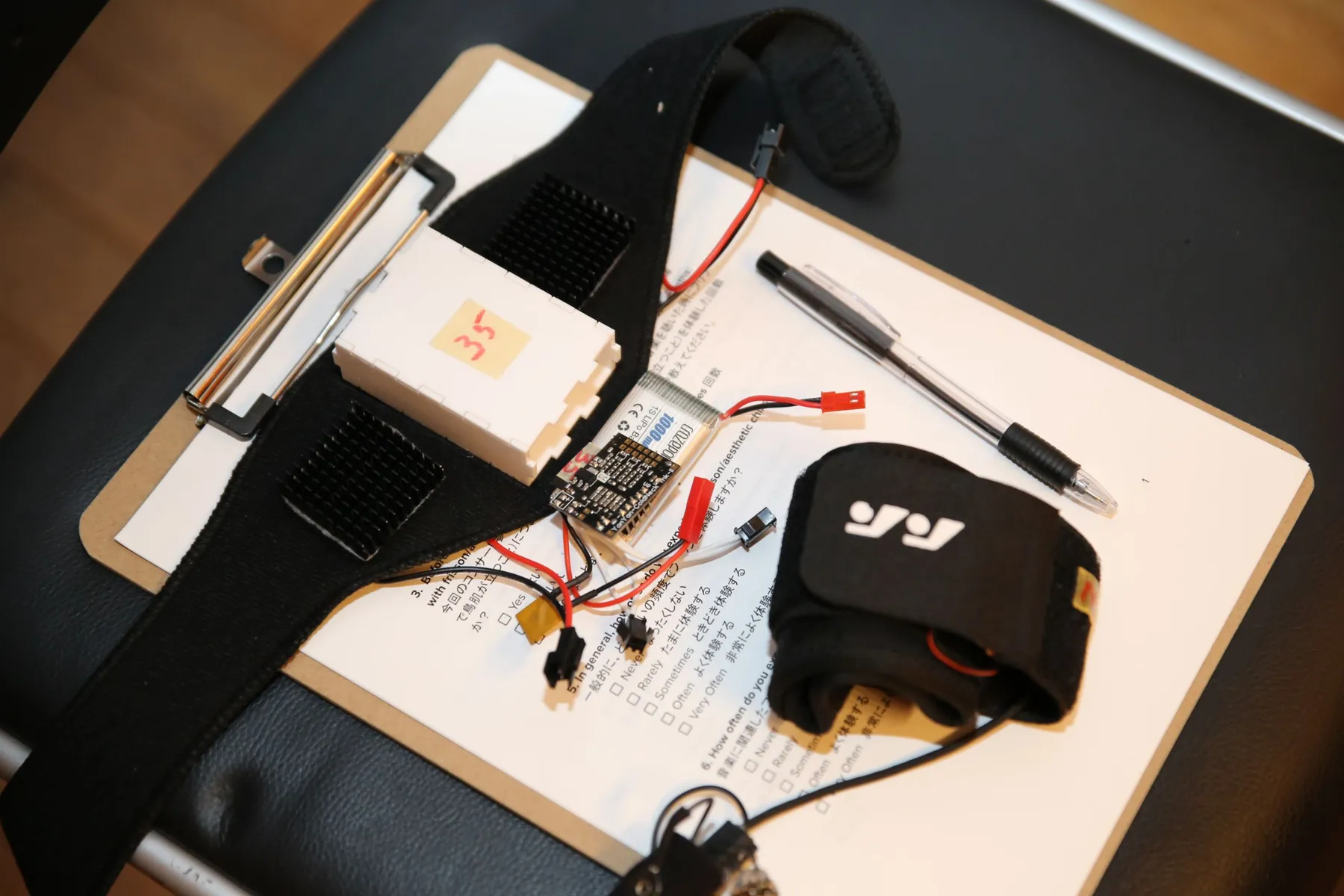
wristband for sensing
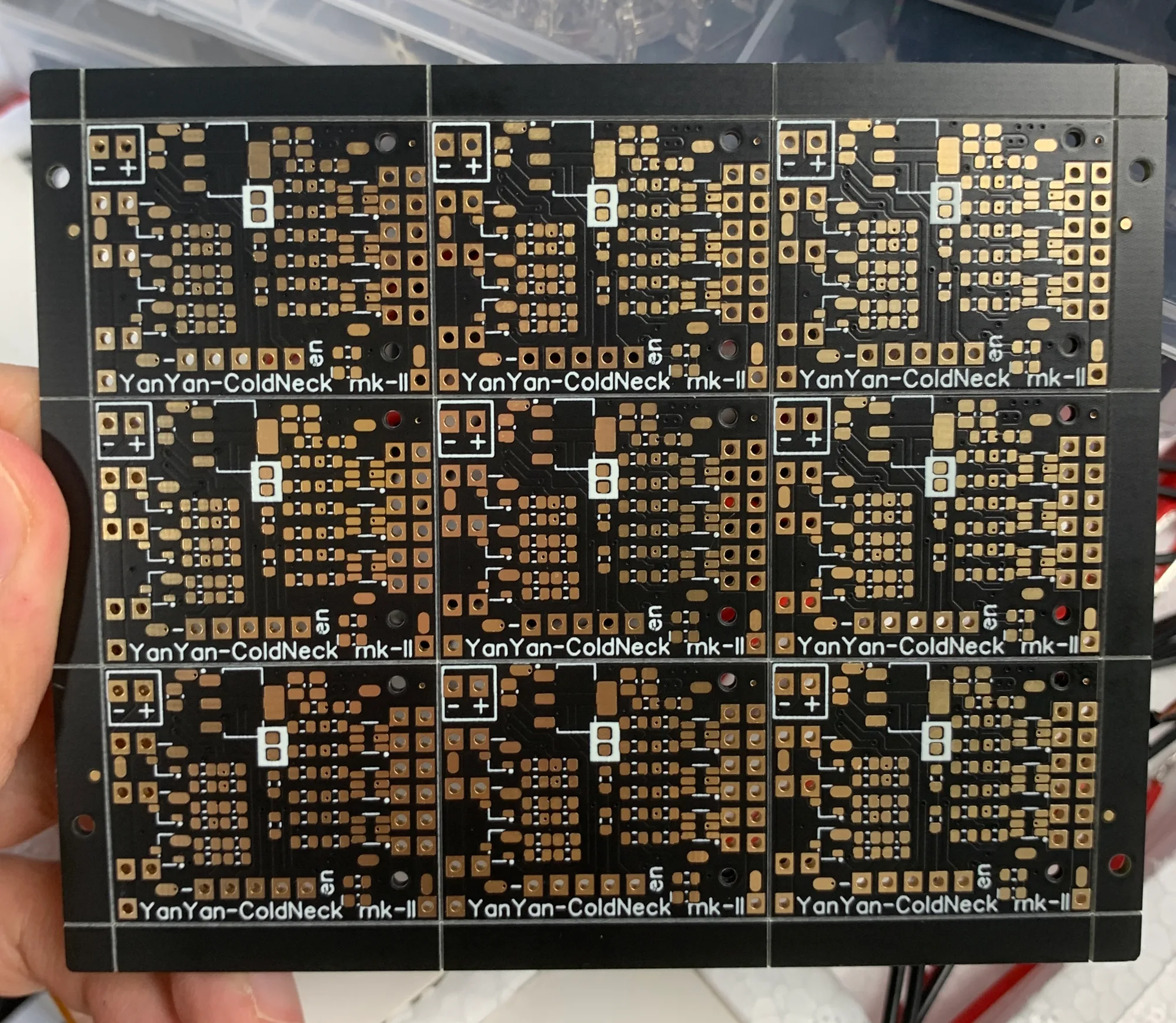
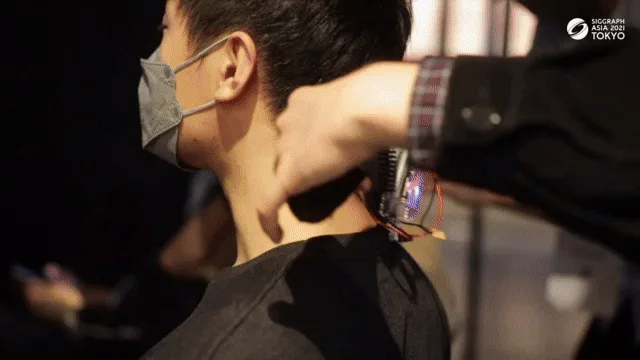
thermo-haptic neckband
 Thermal module 1ControllerBatteryThermal module 2
physiological sensing wristband

Machine Learning model for classifying
automatic frisson recognition
machine learning model
Media Studio
30 participants
30 minutes test
EDA normalised for each person with a MinMax scaler.
features used, selected by random forests' feature importance:
normalized_EDA_Tonicnormalized_Tonic_diff_60normalized_Tonic_diff_30normalized_HRV_MeanNNnormalized_HRV_pNN50normalized_HRV_pNN20normalized_EDA_Phasic
classifier: Support Vector Machine
cross validation: mean and standard deviation reported
 button to report "frisson"
 sensors
Confusion matrix of the model, leave-one-participant-out cross validation. Overall sensitivity 92.81%, overall accuracy 76.06%.
We further developed our model using all the data from 19 participants and applied leave one participant out cross validation (LOPO-CV) to divide data into training and testing sets.
neckband for actuating
trigger frisson by thermo-haptic neckband


Hacking Studio, 15 participants, 5 minutes test
study order
- wristband device wearing
- explanation of frisson, button pressing and questionnaire
- pre-questionnaire
- frisson device wearing test, 1 minute
- self-report
- post-questionnaire
14 participants out of 15 reported frisson-like feelings during the test (M = 0.93; p = 0.00001).
11 participants consciously experienced intense frisson during the test (M = 0.73; p = 0.034).
frisson waves artifact
acknowledgement
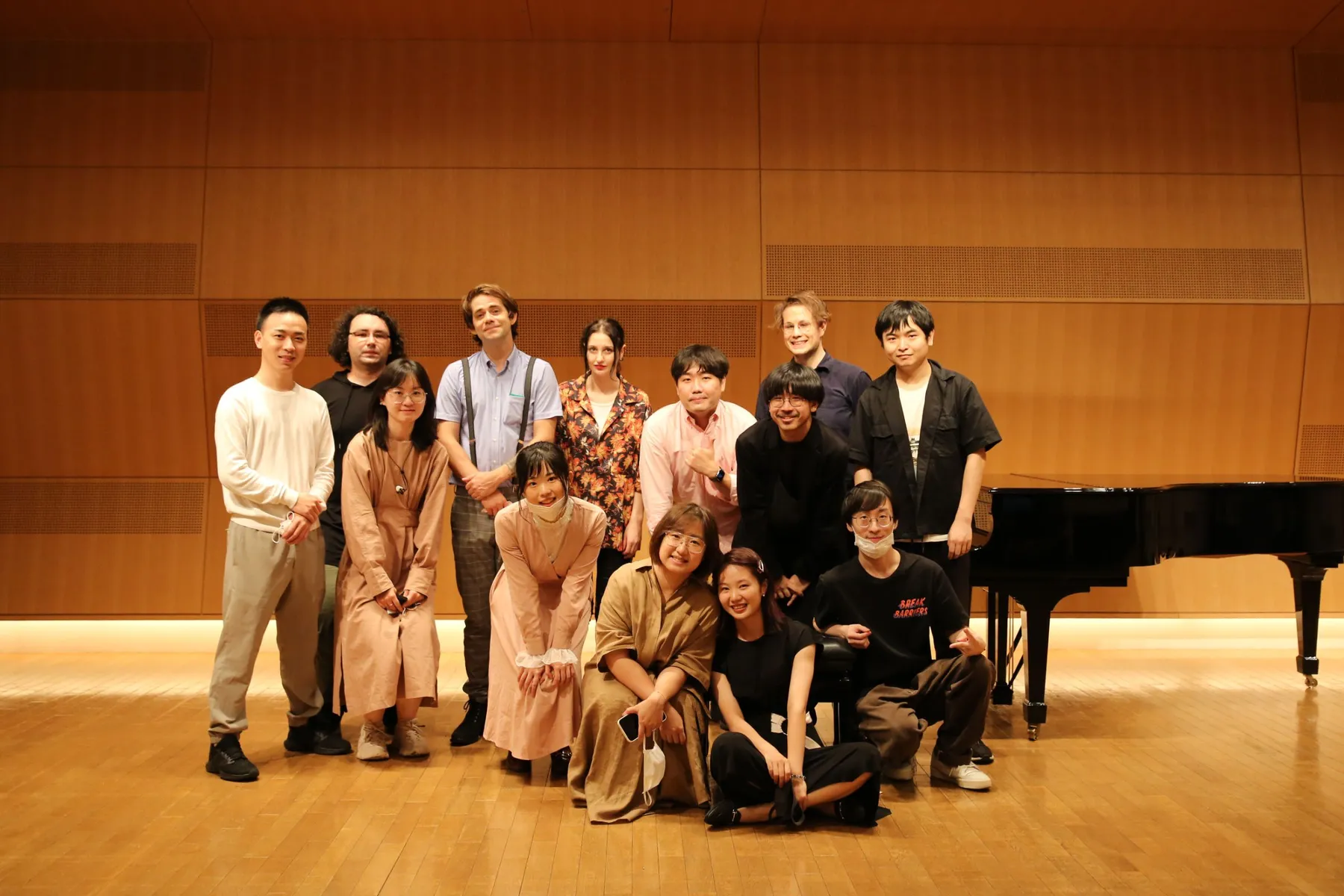
This work is partially supported by the Cybernetic Being project under JST Moonshot R&D Program. Special thanks to J.Y.PLANNING, Studio Apollon, Hua.Y, and Shaowei.H for the kind support and help. Thanks to the many people who offered help and feedback on this project, concert production, and experiment organization.
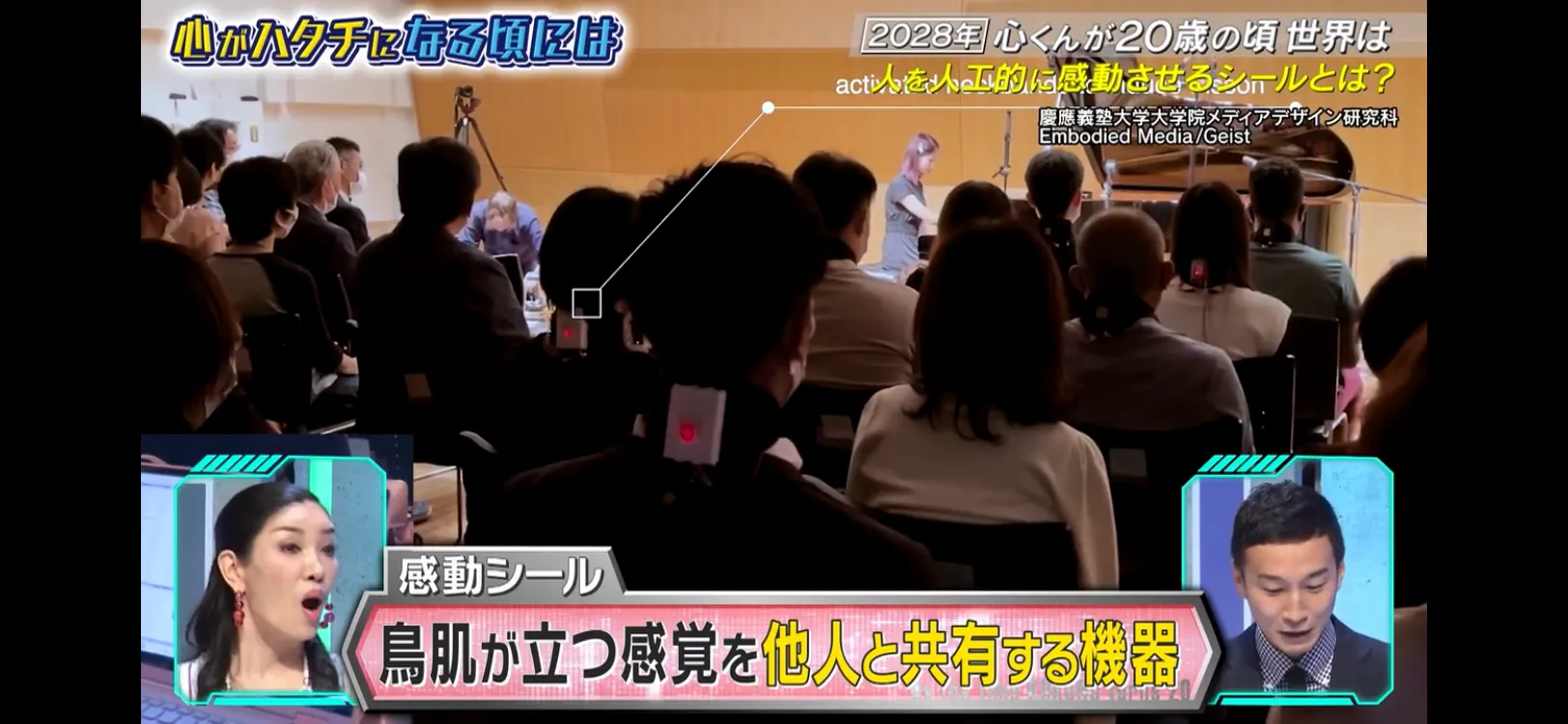
Tv Asahi @Tokyo, Japan
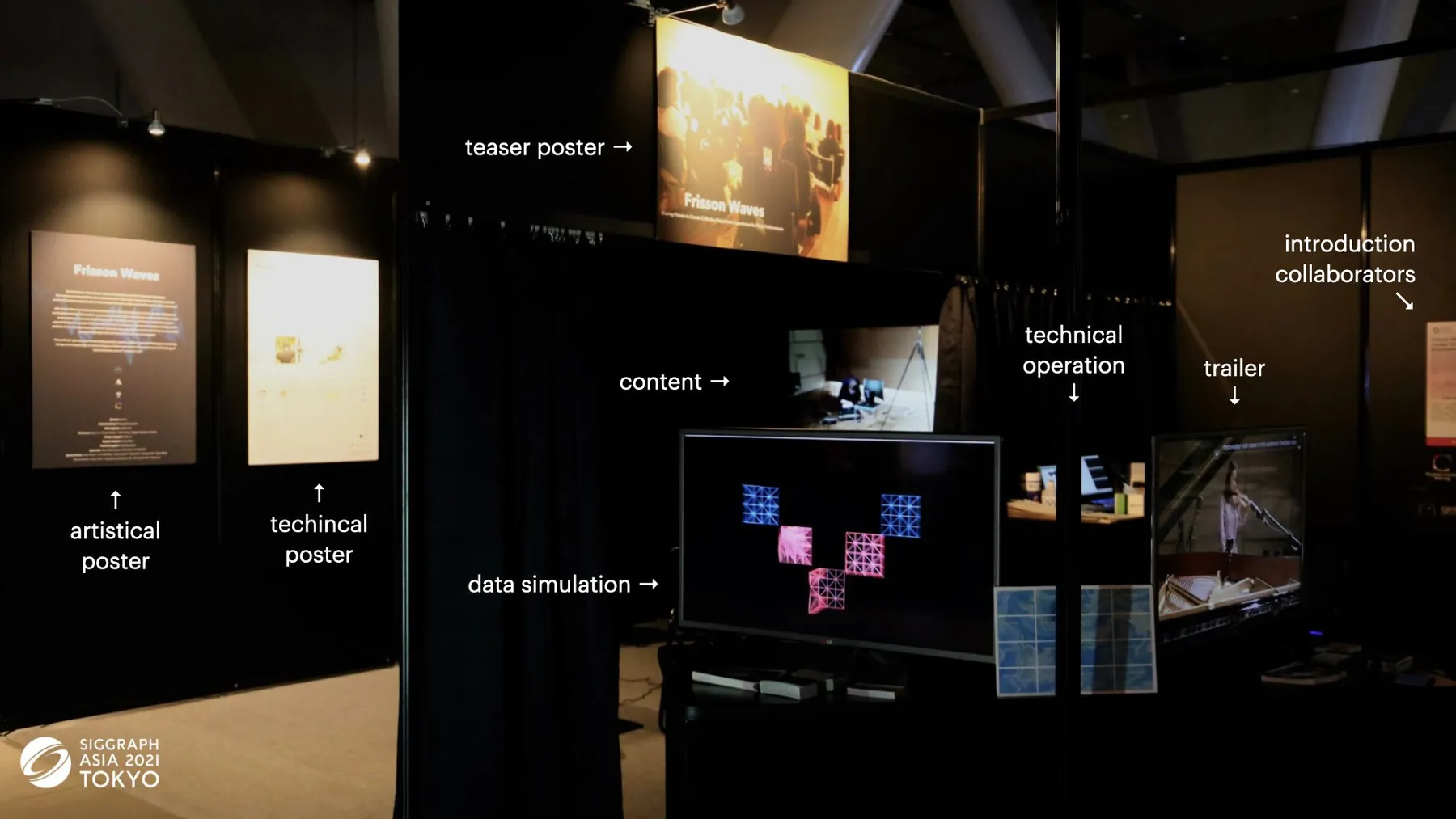
SIGGRAPH ASIA 2021 @Tokyo, Japan
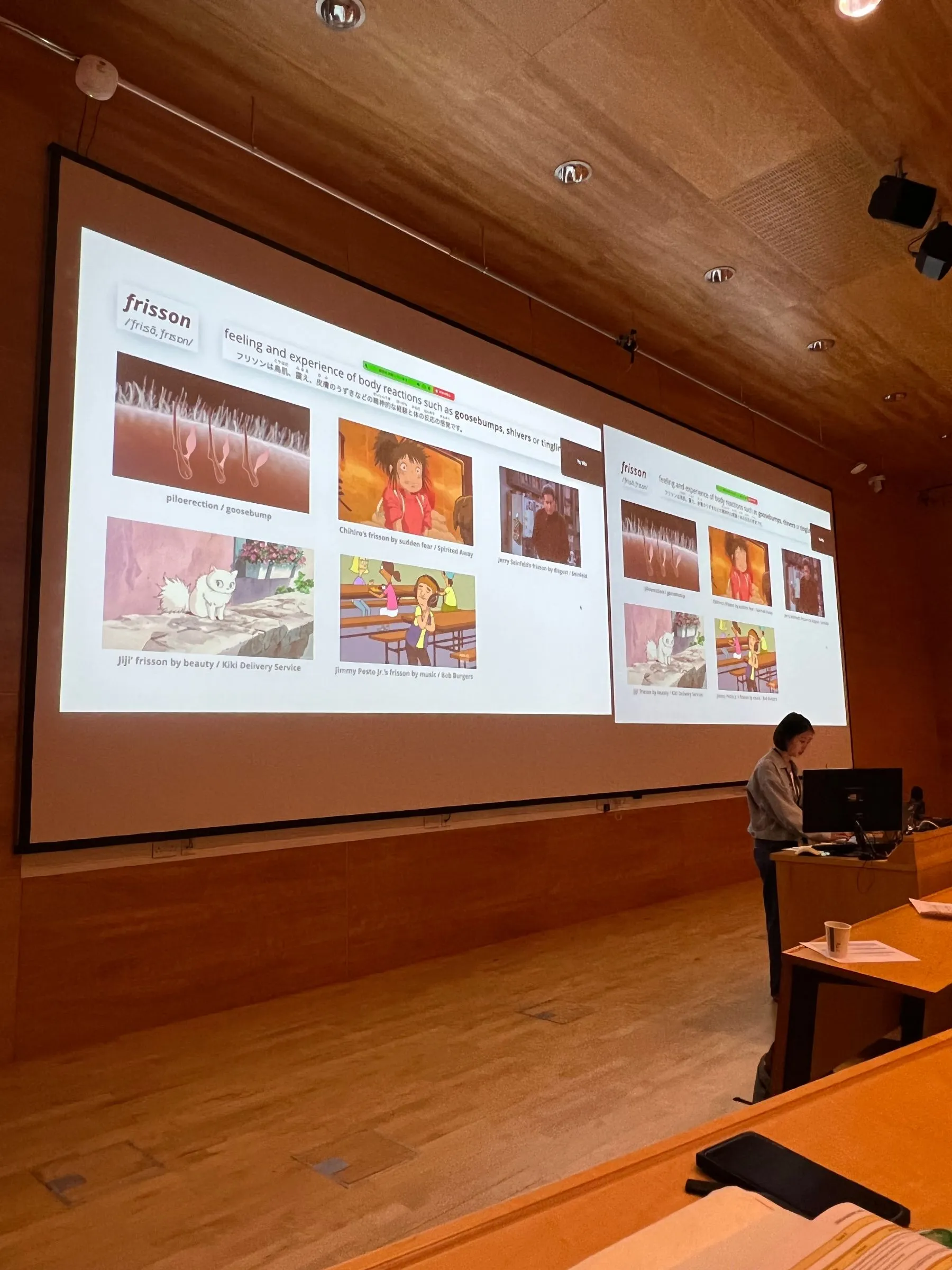
UbiComp IMWUT 2022 @Cambrigde, UK
Publication
Exploring Automatic Detection, Triggering, and Sharing of Aesthetic Chills in Music Performances
▹ Journal first author, ACM Interactive Mobile Wearable Ubiquitous Technologies 2022 in University of Cambridge
Frisson Waves: Sharing Frisson to Create Collective Empathetic Experiences for Music Performances
▹ First author, SIGGRAPH Asia 2021 Emerging Technologies
Exploring Automatic Detection, Triggering, and Sharing of Aesthetic Chills in Music Performances
▹ First author, 2021 IEEE World Haptics Conference
Credit
- Direction / Project Lead / Interaction Design
- Yan He
- Technical Direction / Engineering
- George Chernyshov
- Data Engineering
- Jiawen Han
- Performing
- Muyu Liu / Danny Hynds / Yuehui Yang / Ragnar Thomsen / Yan He
- Technical Support
- Dingding Zheng
- Research Supervisor
- Kouta Minamizawa / Kai Kunze / Yun Suen Pai / Jamie A Ward
- Special thanks
- J.Y.PLANNING / Studio Apollon / Jamie Ward / Kinga Skierś / Ziyue Wang / Qianqian Mu / Kanyu Chen / Matsuda Kento / Qing Zhang / Christopher Kim / Yulan Ju