
A new data center is set to be built in Tokyo’s Akishima to support Japan’s growing demand for AI computation. The development will destroy the Showa-no-Mori (Showa Forest) area, replacing wildlife, green space, and community infrastructure with carbon-heavy industrial infrastructure. In response, AI no Mori investigates how AI—a force that contributes to this destruction—might attempt to memorialize what it displaces.
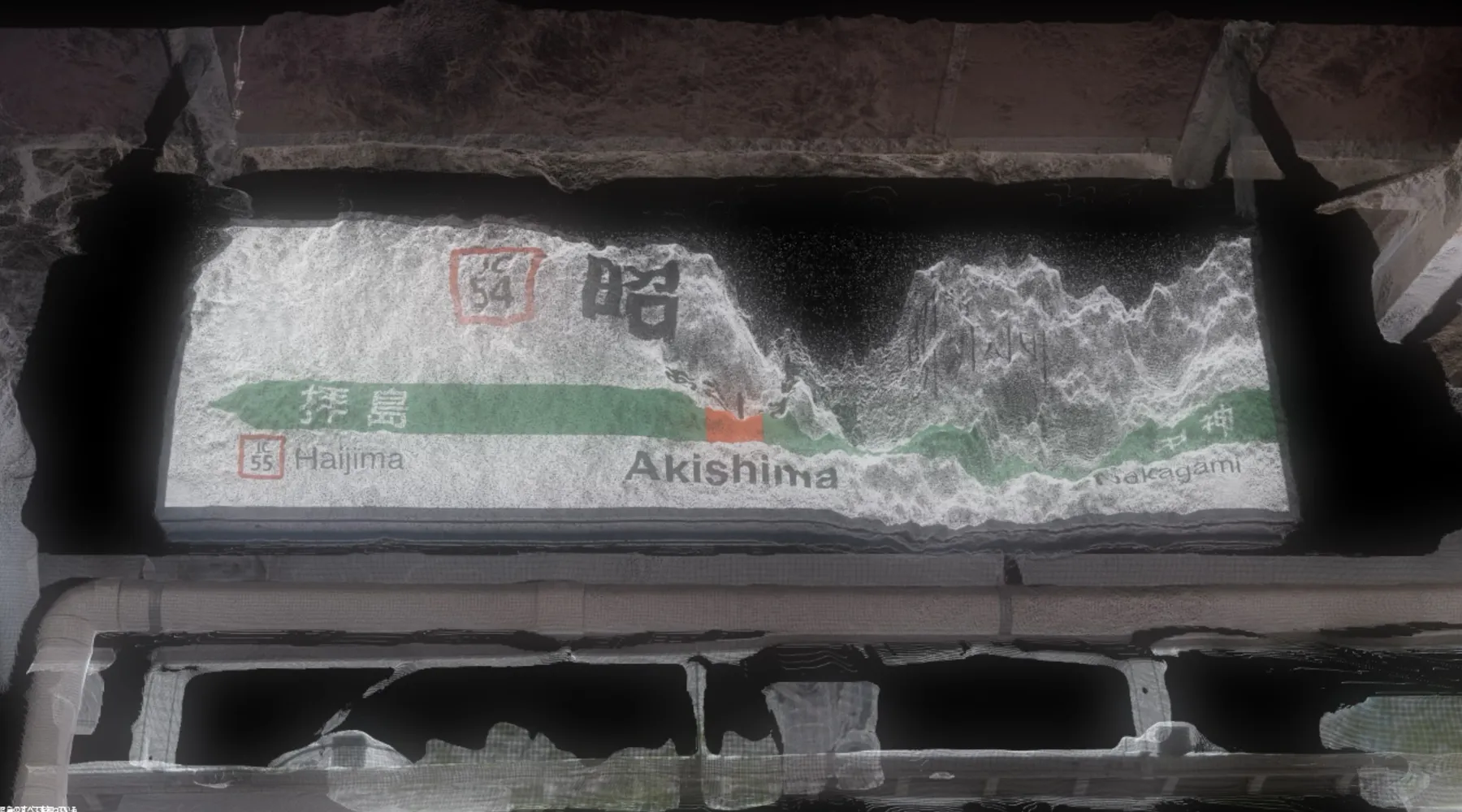
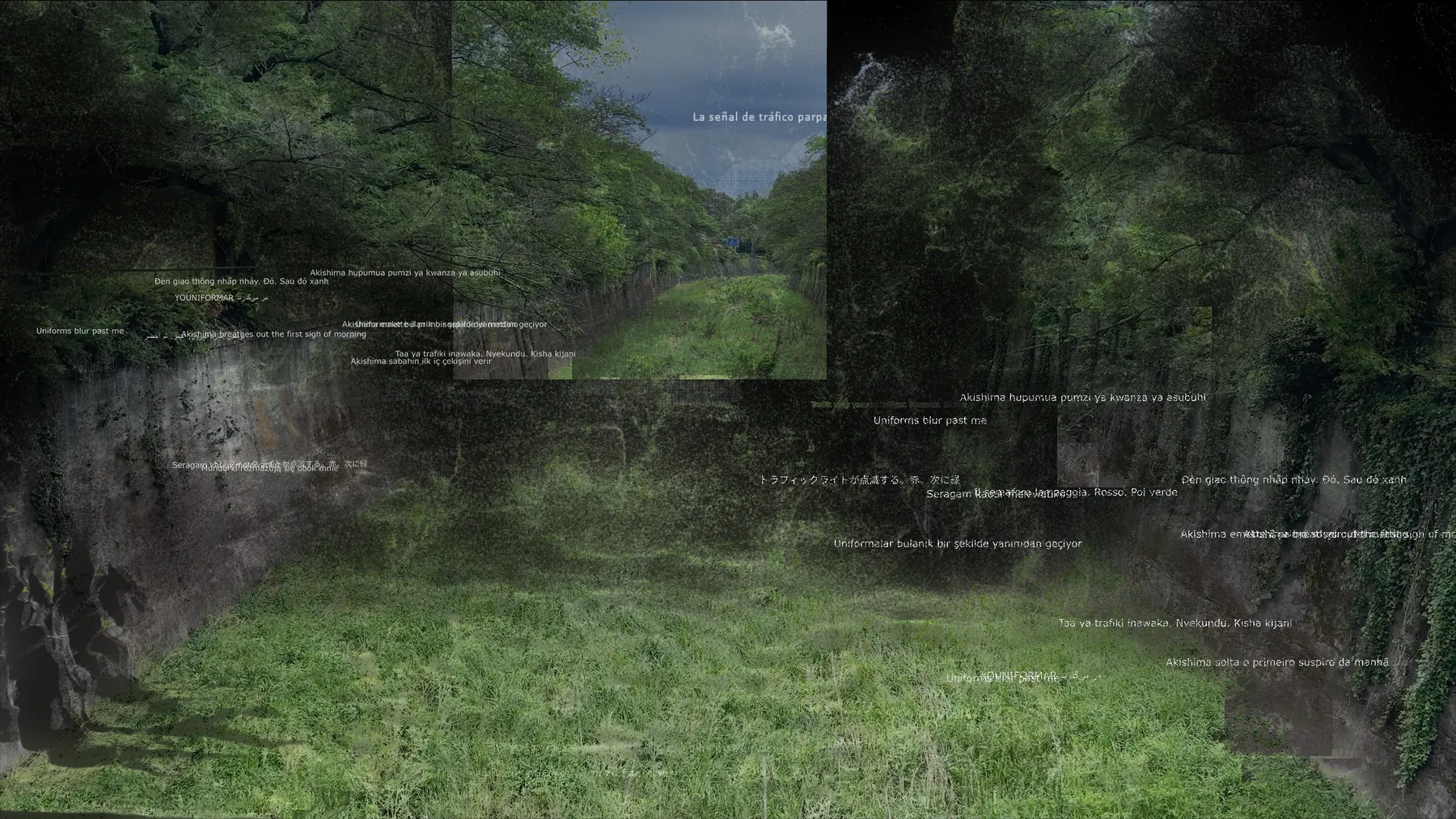
AI no Mori uses AI as both tool and subject: a memory reconstruction engine simulating remembrance of a place it has never truly known. It stitches together fragments—images, sounds, phrases—suggesting how machines might try (and fail) to preserve what their own growth destroys. We are working toward an open-source platform where Akishima’s residents can upload their memories as a participatory archive of resistance.
1. Data Collection
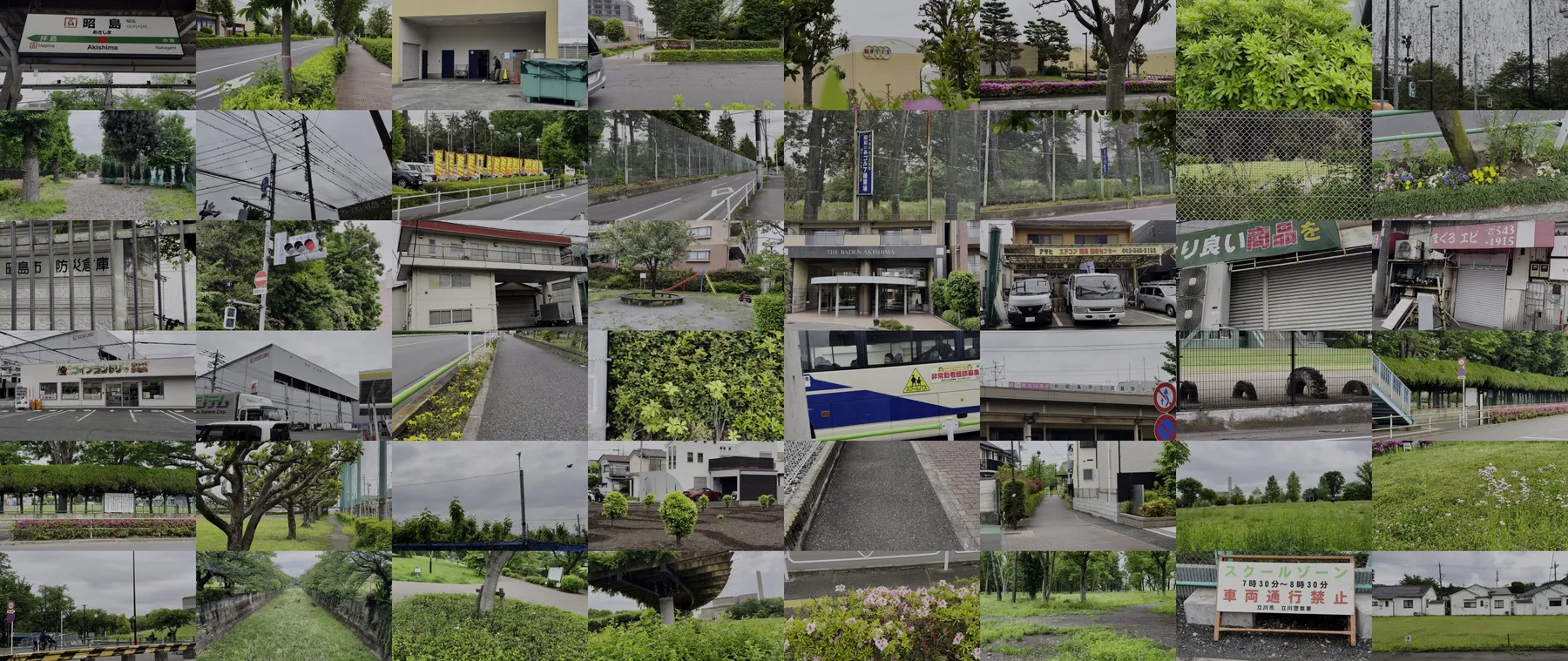
Original video and ambient sound were captured with an iPhone 16 Pro on May 9, 2025, along a path from Akishima Station to Showa Kinen Park, passing through the Showa no Mori Golf Course. From this footage, one frame was extracted every 5 seconds to form a visual archive.
2. Point Cloud Generation
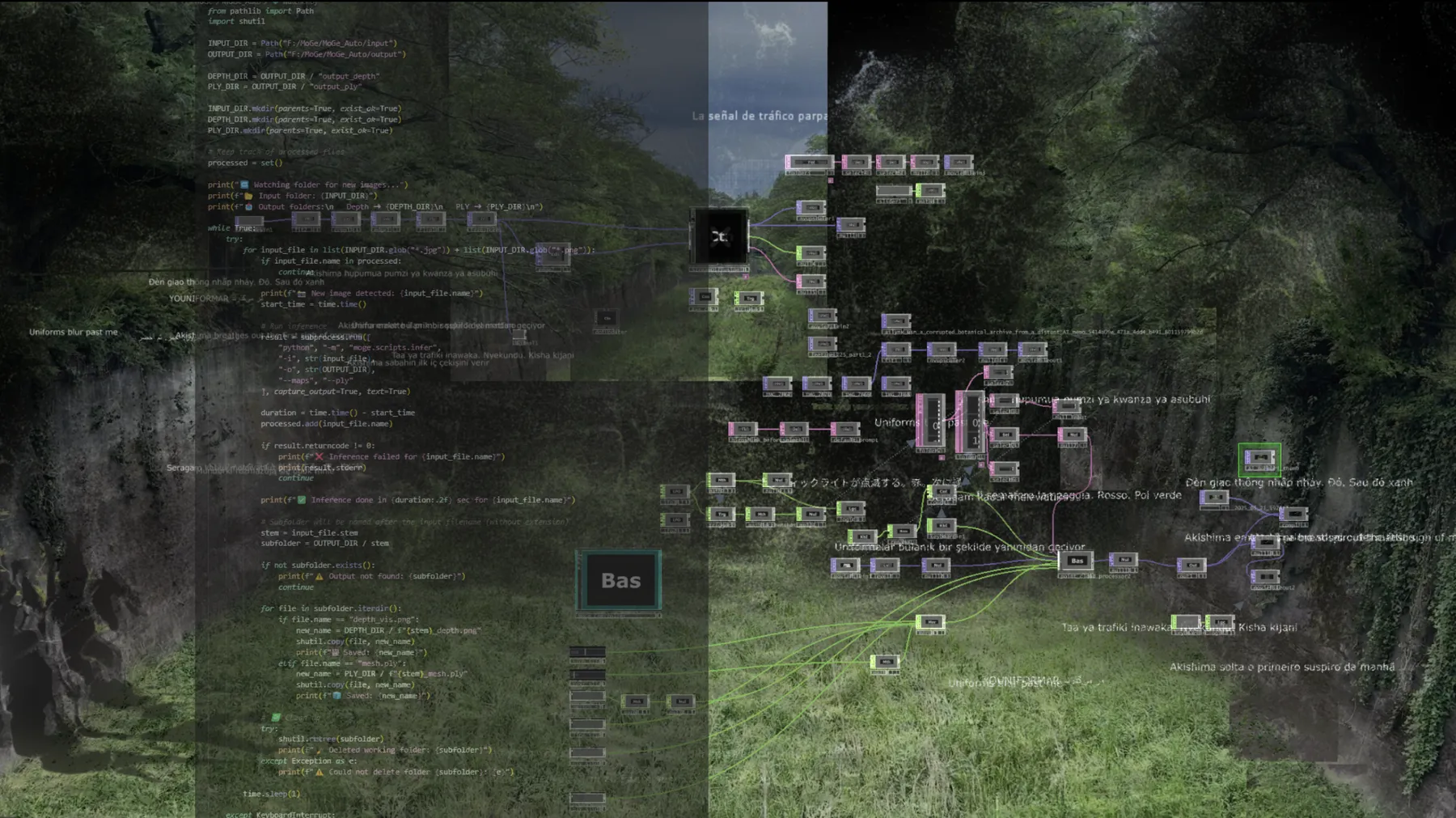
Using MoGe, a Microsoft-developed AI model, the extracted frames were converted into point clouds—depth-based spatial reconstructions representing what AI "sees." A custom-built TouchDesigner plugin enabled real-time generation and manipulation of these point clouds, simulating the fragmented way AI reconstructs memory.

3. Motion Tracking & Visual Assembly
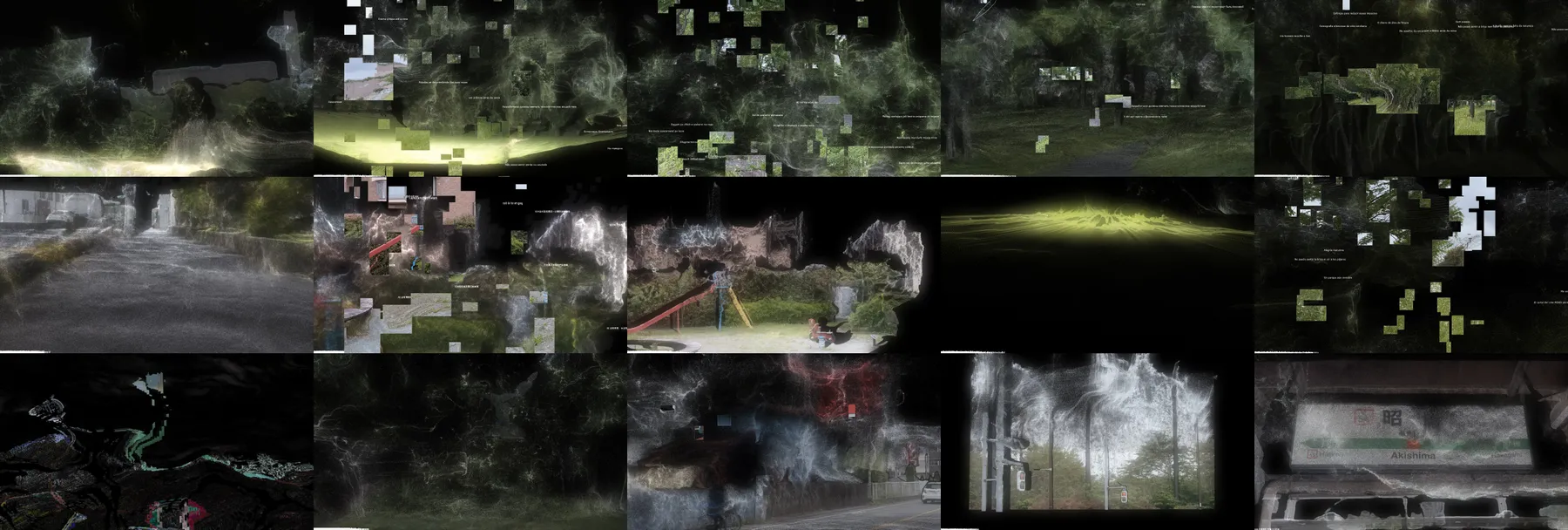
OpenCV-based blob tracking was implemented in TouchDesigner to track motion. Each blob triggered a linked visual fragment, assembling image parts like memory shards—never whole, always partial.
4. Narrative Generation
ChatGPT-4o generated poetic memory phrases from video frames (e.g. “The traffic light flickers. Red. Then green.”). These phrases were translated into 20 languages and mapped onto blobs in TouchDesigner, visually embodying AI’s multilingual memory projection.
5. Sound Integration
Ambient sounds from Akishima were woven into the audiovisual output as textural layers. Sound became the organic link between real space and algorithmic abstraction.
6. Rendering & Composition
All generative elements were rendered in TouchDesigner using an NVIDIA RTX 4090 GPU. Final editing was completed in Adobe Premiere Pro, blending real and AI-generated footage with glitch transitions and color inversions to demarcate shifts in perception.
Custom Plugin Technical documentation
Credits:
Hanako Lowry, Diana Ganea, Yifan Zhuang, Yan He
credits
Hanako Lowry, Diana Ganea, Yifan Zhuang, Yan He